
What It Means to Have a Local Gas Supplier vs. a National One
It happens more than anyone plans for. A cylinder runs low on a Friday afternoon. A process change means you need a gas spec you've never ordered before. A piece of equipment goes down, and you need someone who understands your setup, not just your account number.
In those moments, who you buy from stops being a procurement decision and starts being an operations problem — or the thing that keeps you from having one.
Gas suppliers come in many forms, and every business has different priorities. While some companies focus on serving large regional or national networks, many Montana businesses find value in working with a supplier that combines reliable supply with local expertise, personalized service, and a deep understanding of the industries and communities they serve.
A fabrication shop in Butte, a Hutterite colony managing agricultural gases across a season, a hospital keeping medical oxygen reliable, a brewpub that simply cannot run out of CO2 on a Saturday night; these businesses don't need a catalog. They need a supplier who understands what they're actually doing and can respond accordingly.
That's a different thing entirely.
What you get with a national supplier — and where it ends
Many large national distributors are designed to support a wide range of customers across broad geographic areas. That can create efficiencies, but every operation has unique requirements. For Montana businesses, the difference often comes down to having access to local expertise, responsive support, and people who understand the specific challenges of operating in their market.
You call a 1-800 number and work through a queue. You submit a ticket for a specialty gas question that someone in your local branch could answer in two minutes. You wait on lead times that don't account for where you actually are or what you actually need. And if something goes wrong, you're starting from scratch with whoever picks up because no one on that end has ever been to your facility, seen your equipment, or knows your history.
It's not a knock on those suppliers. It's simply the reality that different suppliers are built to serve customers in different ways.
What local actually means — past the bumper sticker
"Buy local" has become a slogan, which has made it easy to dismiss. But in the industrial gas business, local has a specific and practical meaning that goes well beyond geography.
When you work with General Distributing, you're talking to people who know about your account, not from a CRM entry, but because they've been to your shop. They remember what you ordered last month. They know which process you're running and what purity spec you need. When something changes on your end, they can help you think through what that means for your supply, your equipment, and your costs.
That kind of familiarity takes time to build, and it doesn't exist at a call center.
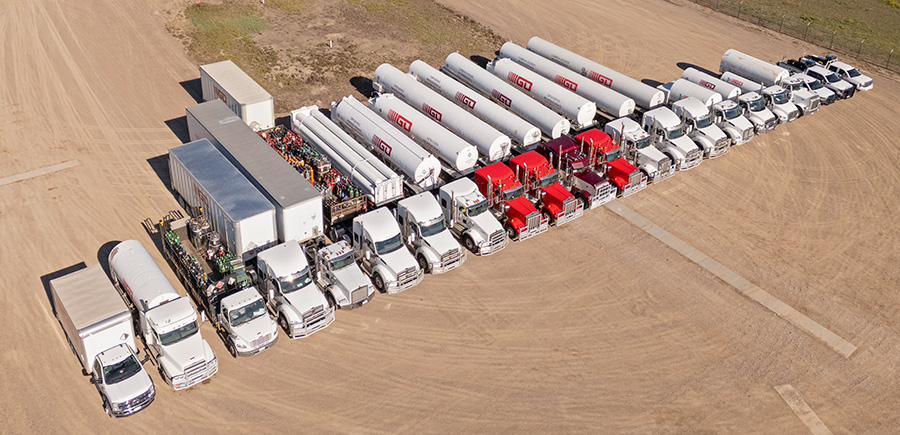
Our six branch locations in Great Falls, Billings, Bozeman, Butte, Helena, and Glendive aren't just convenient pickup points. They're staffed by people with real expertise in the gases, equipment, and industries specific to their region. Add more than 40 authorized resellers across Montana, and the coverage starts to reflect how Montana actually operates: spread out, self-reliant, and not well-served by a one-size approach.
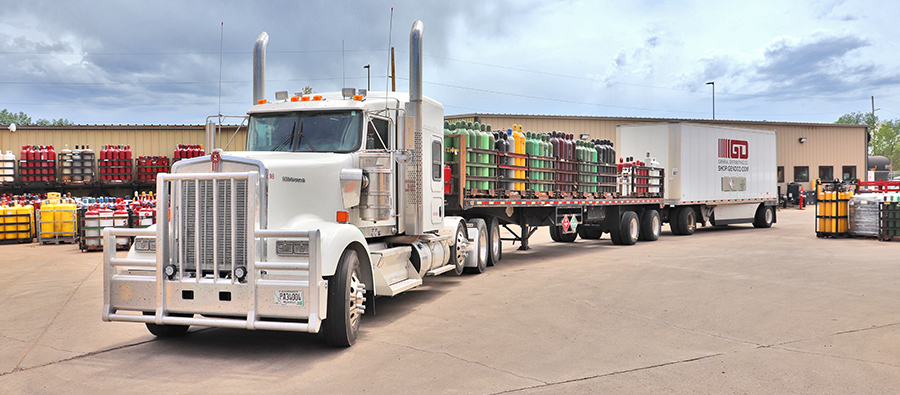
Beyond the gas itself, there are services that simply require a physical presence and a relationship. Cylinder testing and hydrostatic testing. SCBA LEX certification. Microbulk design and installation. On-site product training. Demo Lab access for welding equipment. None of these are catalog items. They require someone who knows your operation and can show up for it.
What a 76-year relationship looks like
Anderson Steel Supply has been a General Distributing customer for 46 years. In their words: "I consider them a partner. I can always count on good service, knowledge, and quality products."
That's not a transaction. That's a working relationship that's outlasted equipment, personnel changes, and decades of industry shifts, because the people on both sides of it stayed invested.
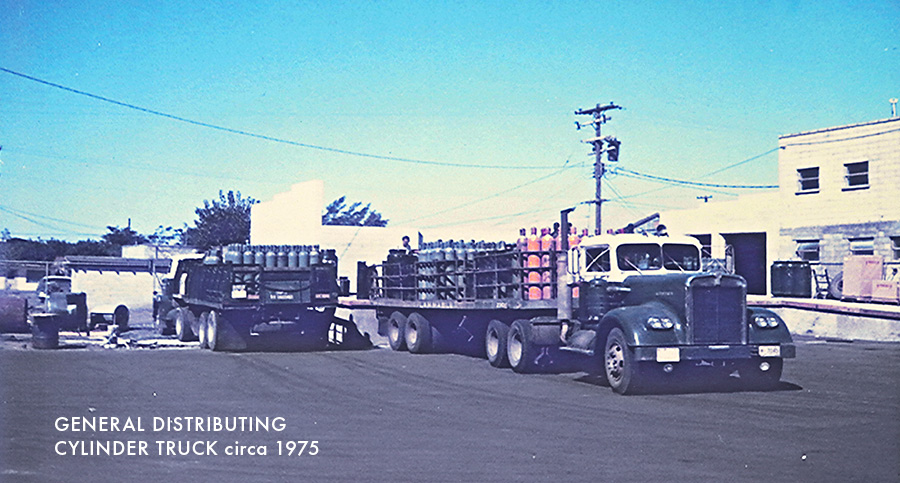
General Distributing was founded in 1948 in Great Falls by the Bliss family. We're now in our fourth generation of family ownership, which means the people running this company today have a direct line to why it was built in the first place. That continuity shows up in how we work: the same commitment to knowing our customers, answering the phone, and being the kind of supplier that earns the word "partner."
A 1-800 number doesn't build 78-year relationships. People do.
When the difference stops being theoretical
Most of the time, the local vs. national question feels abstract. Then something happens and it gets concrete fast.
A welder is preparing for a critical job and needs a real recommendation on filler metal, not a spec sheet, but someone who understands the application, the base material, and the process. That call gets answered differently depending on who you're calling.
A restaurant needs CO2 on a reliable schedule. Any gap in supply shuts down production. When a delivery doesn't show, the question is whether you have a contact who knows your account and can solve it, or a ticket number and an estimated response window.
A manufacturer has grown to the point where managing individual cylinders no longer makes sense. Moving to Microbulk means a conversation, a site assessment, a custom installation, and ongoing support, not an online cart and a shipping estimate.
These are the moments that reveal what your supplier relationship is actually worth.
The bottom line
Every business has its own supply needs, and many companies use a combination of suppliers to support different parts of their operation. The key is understanding the value that comes from working with a supplier that provides not just product availability, but also the ongoing relationship, the expertise, the response time, the people who know your name and your operation — that's what we've been building for 78 years. Not because it's a good marketing story, but because it's the only way to actually serve the businesses and industries that keep Montana running.
If you're evaluating your gas supply setup, or you just want to talk through what your operation actually needs, give us a call or stop by your nearest branch. Our team is here.
Subscribe to Gendco Happenings — our biweekly newsletter — to stay connected with what's happening across our six Montana branches.
It happens more than anyone plans for. A cylinder runs low on a Friday afternoon. A process change means you need a gas spec you've never ordered before. A piece of equipment goes down, and you need someone who understands your setup, not just your account number.
In those moments, who you buy from stops being a procurement decision and starts being an operations problem — or the thing that keeps you from having one.
Gas suppliers come in many forms, and every business has different priorities. While some companies focus on serving large regional or national networks, many Montana businesses find value in working with a supplier that combines reliable supply with local expertise, personalized service, and a deep understanding of the industries and communities they serve.
A fabrication shop in Butte, a Hutterite colony managing agricultural gases across a season, a hospital keeping medical oxygen reliable, a brewpub that simply cannot run out of CO2 on a Saturday night; these businesses don't need a catalog. They need a supplier who understands what they're actually doing and can respond accordingly.
That's a different thing entirely.
What you get with a national supplier — and where it ends
Many large national distributors are designed to support a wide range of customers across broad geographic areas. That can create efficiencies, but every operation has unique requirements. For Montana businesses, the difference often comes down to having access to local expertise, responsive support, and people who understand the specific challenges of operating in their market.
You call a 1-800 number and work through a queue. You submit a ticket for a specialty gas question that someone in your local branch could answer in two minutes. You wait on lead times that don't account for where you actually are or what you actually need. And if something goes wrong, you're starting from scratch with whoever picks up because no one on that end has ever been to your facility, seen your equipment, or knows your history.
It's not a knock on those suppliers. It's simply the reality that different suppliers are built to serve customers in different ways.
What local actually means — past the bumper sticker
"Buy local" has become a slogan, which has made it easy to dismiss. But in the industrial gas business, local has a specific and practical meaning that goes well beyond geography.
When you work with General Distributing, you're talking to people who know about your account, not from a CRM entry, but because they've been to your shop. They remember what you ordered last month. They know which process you're running and what purity spec you need. When something changes on your end, they can help you think through what that means for your supply, your equipment, and your costs.
That kind of familiarity takes time to build, and it doesn't exist at a call center.
Our six branch locations in Great Falls, Billings, Bozeman, Butte, Helena, and Glendive aren't just convenient pickup points. They're staffed by people with real expertise in the gases, equipment, and industries specific to their region. Add more than 40 authorized resellers across Montana, and the coverage starts to reflect how Montana actually operates: spread out, self-reliant, and not well-served by a one-size approach.
Beyond the gas itself, there are services that simply require a physical presence and a relationship. Cylinder testing and hydrostatic testing. SCBA LEX certification. Microbulk design and installation. On-site product training. Demo Lab access for welding equipment. None of these are catalog items. They require someone who knows your operation and can show up for it.
What a 76-year relationship looks like
Anderson Steel Supply has been a General Distributing customer for 46 years. In their words: "I consider them a partner. I can always count on good service, knowledge, and quality products."
That's not a transaction. That's a working relationship that's outlasted equipment, personnel changes, and decades of industry shifts, because the people on both sides of it stayed invested.
General Distributing was founded in 1948 in Great Falls by the Bliss family. We're now in our fourth generation of family ownership, which means the people running this company today have a direct line to why it was built in the first place. That continuity shows up in how we work: the same commitment to knowing our customers, answering the phone, and being the kind of supplier that earns the word "partner."
A 1-800 number doesn't build 78-year relationships. People do.
When the difference stops being theoretical
Most of the time, the local vs. national question feels abstract. Then something happens and it gets concrete fast.
A welder is preparing for a critical job and needs a real recommendation on filler metal, not a spec sheet, but someone who understands the application, the base material, and the process. That call gets answered differently depending on who you're calling.
A restaurant needs CO2 on a reliable schedule. Any gap in supply shuts down production. When a delivery doesn't show, the question is whether you have a contact who knows your account and can solve it, or a ticket number and an estimated response window.
A manufacturer has grown to the point where managing individual cylinders no longer makes sense. Moving to Microbulk means a conversation, a site assessment, a custom installation, and ongoing support, not an online cart and a shipping estimate.
These are the moments that reveal what your supplier relationship is actually worth.
The bottom line
Every business has its own supply needs, and many companies use a combination of suppliers to support different parts of their operation. The key is understanding the value that comes from working with a supplier that provides not just product availability, but also the ongoing relationship, the expertise, the response time, the people who know your name and your operation — that's what we've been building for 78 years. Not because it's a good marketing story, but because it's the only way to actually serve the businesses and industries that keep Montana running.
If you're evaluating your gas supply setup, or you just want to talk through what your operation actually needs, give us a call or stop by your nearest branch. Our team is here.