
The Invisible Ingredient: How Montana's Restaurants and Food Processors Use Industrial Gases
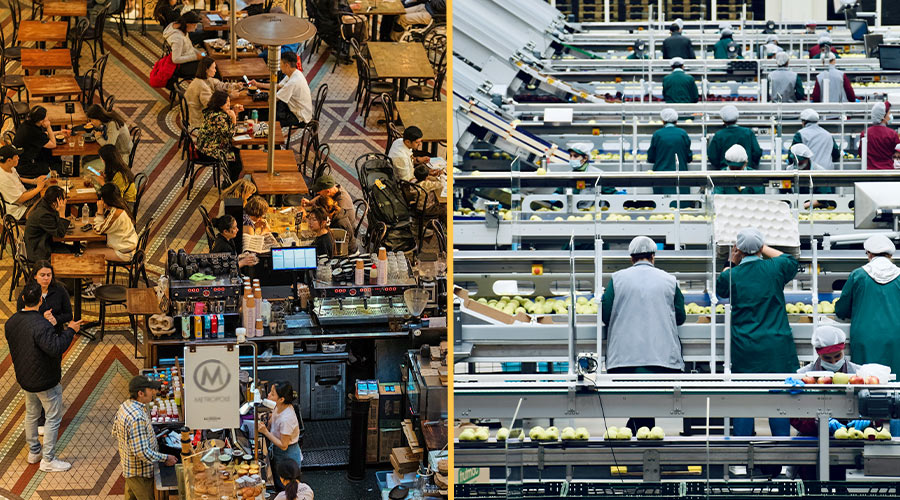
Walk into a restaurant kitchen or food processing facility and industrial gas probably isn't the first thing you notice. You see ovens, prep stations, refrigeration units, packaging lines, and beverage dispensers doing visible, recognizable work.
But behind all of it, gases like carbon dioxide and nitrogen are quietly doing some of the most important work in the building, and most of the people eating, drinking, and shopping on the other end of that work have no idea.
You interact with products that depend on industrial gases every time you order a fountain drink or beer on tap, open a bag of chips, pull packaged meat from a grocery cooler or enjoy a pour of nitro cold brew coffee at a Montana café. The gas is never on the label. It's rarely part of the conversation. And it's doing exactly what it's supposed to do.
The Gases Behind Your Drink
Restaurants use industrial gas in ways customers encounter every day without connecting the dots.
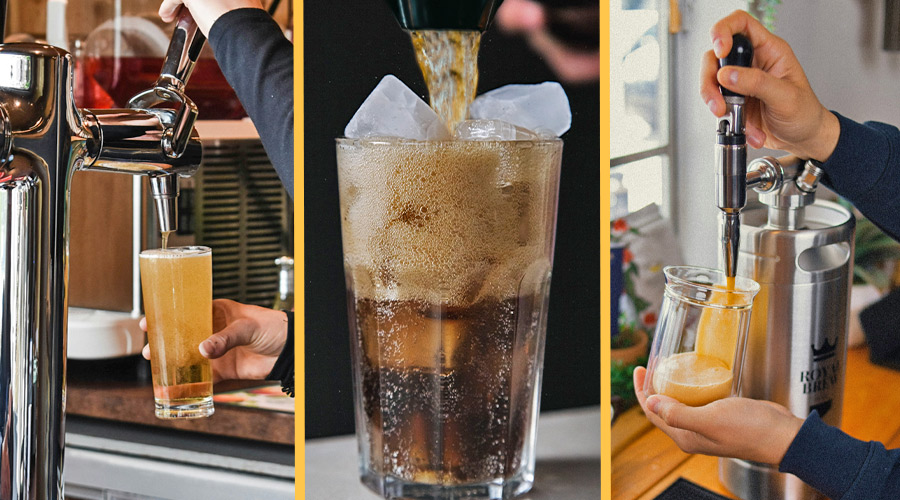
Order a fountain soda and CO₂ is responsible for the carbonation, dissolved into the beverage under pressure, released as bubbles the moment the pressure drops into your cup. Behind the bar or in the back room of any draft operation, compressed gas is moving beverages through supply lines and out of the tap on every pour.
Nitrogen tells a different story. Where CO₂ produces the larger, sharper bubbles associated with carbonation, nitrogen creates something finer; smaller bubbles, a smoother texture, the cascading pour that makes a nitro cold brew coffee or a nitro stout visually distinctive before it ever reaches your lips. While one is beer and the other coffee, both show how changing the gas used to dispense a beverage can noticeably change the customer's experience.
Montana's cafes and taprooms that have added nitro to their menu aren't just following a trend. They've added a gas system to their operation that requires a different supply, a different pressure setup, and a supplier who understands the difference.
What a customer thinks of as simply a drink is the end result of a gas system working correctly in the background. When that system has a problem, the customer notices, even if they don't know what to call it.
For Food Packaging, It Starts with Oxygen and the Problem It Creates
One of the biggest challenges in food production isn't heat or contamination or shelf life in the abstract. It's oxygen.
Once food is exposed to air, oxidation begins affecting flavor, color, texture, and freshness in ways that are sometimes visible and sometimes not but always moving in the wrong direction. Food processors manage that exposure through modified atmosphere packaging, commonly called MAP.
"Instead of sealing normal air inside a package, MAP replaces some or all of that air with a carefully selected gas or gas mixture — typically nitrogen, carbon dioxide, or a combination of both. The exact atmosphere depends on the product and what the processor is trying to protect."
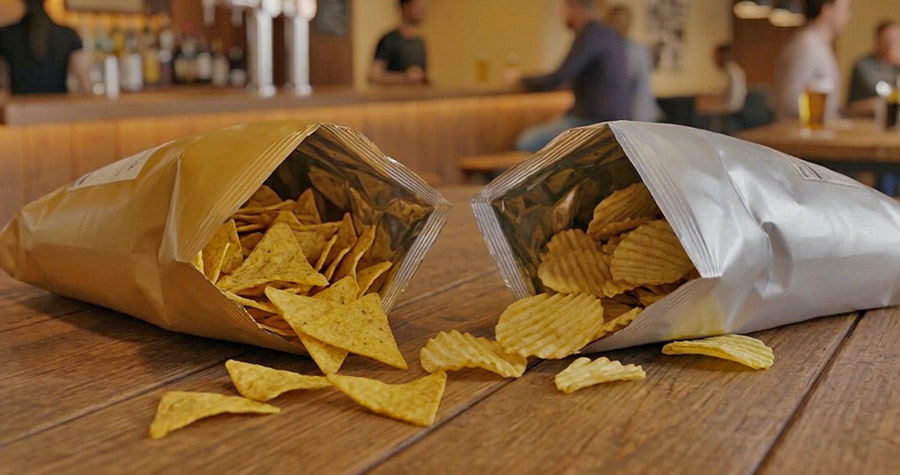
The snack aisle is the most familiar example. That extra space inside a bag of potato chips isn't filler; nitrogen is commonly used to create a low-oxygen environment that protects the product from oxidation while also cushioning fragile chips during transportation. The same technology runs across the food industry: meats, cheeses, baked goods, prepared foods, and fresh produce. The package looks simple. The gas science behind it isn't.
Before the Package: Protecting Ingredients Earlier in the Process
Gases don't always wait until the packaging line to do their job.
Certain food ingredients and processing operations are sensitive to oxygen exposure long before a finished product exists. Nitrogen can displace oxygen inside storage vessels, mixing tanks, and processing equipment — creating a controlled atmosphere around the ingredient or product at the stage where protecting it matters most.
The principle is simple even when the application is specific: controlling what surrounds a food product is sometimes as important as controlling the food itself. A Montana food processor managing ingredient quality from storage through production through packaging is potentially using industrial gas at multiple points in that chain — not as a single application but as a system running across the operation.
Temperature: From Cold to Extremely Cold
Every food operation understands temperature. Nitrogen takes that understanding to a different level.
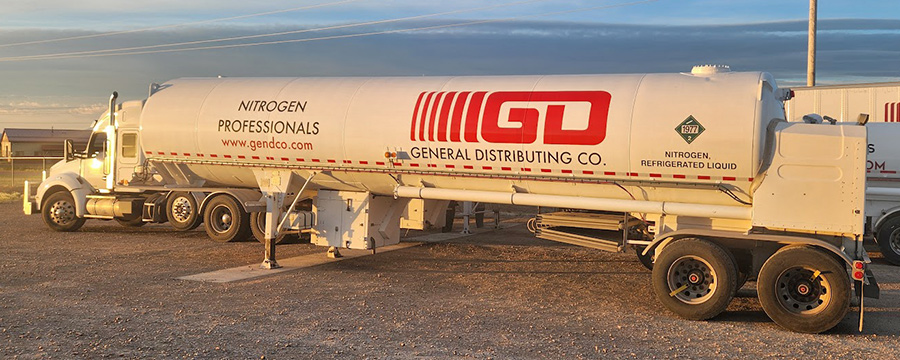
Liquid nitrogen sits at approximately -320°F. Food processors use that extreme cold for rapid chilling and freezing, not through a conventional refrigeration cycle, but by direct application to the product on the line. Cryogenic freezing brings temperature down fast enough to matter for applications involving meat, seafood, prepared foods, and individual food components where speed of chilling affects both quality and food safety outcomes.
This is a different way of thinking about industrial gas. It isn't coming out of a cylinder and going into a process. It's becoming part of the production process itself, handling temperature management in ways that mechanical refrigeration alone can't replicate at the required speed and scale.
The Ingredient You Never See
That's what makes industrial gases easy to overlook — and worth understanding.
CO₂ carbonates a beverage at one operation while running a modified atmosphere packaging line at another. Nitrogen protects a bag of chips from oxidation, gives cold brew its texture, and becomes a cryogenic liquid used for rapid cooling — sometimes all within the same production facility. The same general product category doing completely different jobs depending on where in the process you encounter it.
For Montana's restaurants, breweries, food processors, and beverage operations, the gas supply behind these applications isn't a secondary consideration. It's infrastructure. The right grade, the right delivery schedule, the right supplier relationship, those details determine whether the systems running quietly in the background keep running or become the problem nobody saw coming.
General Distributing supplies food and beverage-grade CO₂, nitrogen, and specialty gases to food and beverage operations across Montana from six branch locations. If you're running a system that depends on industrial gases, whether you've thought about it that way or not, we’re here to help make sure you have the right supply in place before you need it.
Subscribe to Gendco Happenings — our biweekly newsletter — to stay connected with what's happening across our six Montana branches.
Walk into a restaurant kitchen or food processing facility and industrial gas probably isn't the first thing you notice. You see ovens, prep stations, refrigeration units, packaging lines, and beverage dispensers doing visible, recognizable work.
But behind all of it, gases like carbon dioxide and nitrogen are quietly doing some of the most important work in the building, and most of the people eating, drinking, and shopping on the other end of that work have no idea.
You interact with products that depend on industrial gases every time you order a fountain drink or beer on tap, open a bag of chips, pull packaged meat from a grocery cooler or enjoy a pour of nitro cold brew coffee at a Montana café. The gas is never on the label. It's rarely part of the conversation. And it's doing exactly what it's supposed to do.
The Gases Behind Your Drink
Restaurants use industrial gas in ways customers encounter every day without connecting the dots.
Order a fountain soda and CO₂ is responsible for the carbonation, dissolved into the beverage under pressure, released as bubbles the moment the pressure drops into your cup. Behind the bar or in the back room of any draft operation, compressed gas is moving beverages through supply lines and out of the tap on every pour.
Nitrogen tells a different story. Where CO₂ produces the larger, sharper bubbles associated with carbonation, nitrogen creates something finer; smaller bubbles, a smoother texture, the cascading pour that makes a nitro cold brew coffee or a nitro stout visually distinctive before it ever reaches your lips. While one is beer and the other coffee, both show how changing the gas used to dispense a beverage can noticeably change the customer's experience.
Montana's cafes and taprooms that have added nitro to their menu aren't just following a trend. They've added a gas system to their operation that requires a different supply, a different pressure setup, and a supplier who understands the difference.
What a customer thinks of as simply a drink is the end result of a gas system working correctly in the background. When that system has a problem, the customer notices, even if they don't know what to call it.
For Food Packaging, It Starts with Oxygen and the Problem It Creates
One of the biggest challenges in food production isn't heat or contamination or shelf life in the abstract. It's oxygen.
Once food is exposed to air, oxidation begins affecting flavor, color, texture, and freshness in ways that are sometimes visible and sometimes not but always moving in the wrong direction. Food processors manage that exposure through modified atmosphere packaging, commonly called MAP.
"Instead of sealing normal air inside a package, MAP replaces some or all of that air with a carefully selected gas or gas mixture — typically nitrogen, carbon dioxide, or a combination of both. The exact atmosphere depends on the product and what the processor is trying to protect."
The snack aisle is the most familiar example. That extra space inside a bag of potato chips isn't filler; nitrogen is commonly used to create a low-oxygen environment that protects the product from oxidation while also cushioning fragile chips during transportation. The same technology runs across the food industry: meats, cheeses, baked goods, prepared foods, and fresh produce. The package looks simple. The gas science behind it isn't.
Before the Package: Protecting Ingredients Earlier in the Process
Gases don't always wait until the packaging line to do their job.
Certain food ingredients and processing operations are sensitive to oxygen exposure long before a finished product exists. Nitrogen can displace oxygen inside storage vessels, mixing tanks, and processing equipment — creating a controlled atmosphere around the ingredient or product at the stage where protecting it matters most.
The principle is simple even when the application is specific: controlling what surrounds a food product is sometimes as important as controlling the food itself. A Montana food processor managing ingredient quality from storage through production through packaging is potentially using industrial gas at multiple points in that chain — not as a single application but as a system running across the operation.
Temperature: From Cold to Extremely Cold
Every food operation understands temperature. Nitrogen takes that understanding to a different level.
Liquid nitrogen sits at approximately -320°F. Food processors use that extreme cold for rapid chilling and freezing, not through a conventional refrigeration cycle, but by direct application to the product on the line. Cryogenic freezing brings temperature down fast enough to matter for applications involving meat, seafood, prepared foods, and individual food components where speed of chilling affects both quality and food safety outcomes.
This is a different way of thinking about industrial gas. It isn't coming out of a cylinder and going into a process. It's becoming part of the production process itself, handling temperature management in ways that mechanical refrigeration alone can't replicate at the required speed and scale.
The Ingredient You Never See
That's what makes industrial gases easy to overlook — and worth understanding.
CO₂ carbonates a beverage at one operation while running a modified atmosphere packaging line at another. Nitrogen protects a bag of chips from oxidation, gives cold brew its texture, and becomes a cryogenic liquid used for rapid cooling — sometimes all within the same production facility. The same general product category doing completely different jobs depending on where in the process you encounter it.
For Montana's restaurants, breweries, food processors, and beverage operations, the gas supply behind these applications isn't a secondary consideration. It's infrastructure. The right grade, the right delivery schedule, the right supplier relationship, those details determine whether the systems running quietly in the background keep running or become the problem nobody saw coming.
General Distributing supplies food and beverage-grade CO₂, nitrogen, and specialty gases to food and beverage operations across Montana from six branch locations. If you're running a system that depends on industrial gases, whether you've thought about it that way or not, we’re here to help make sure you have the right supply in place before you need it.