
The Sectors That Weld Montana Together - Fueled by Gases Series: Part 2 of 8
Manufacturing, fabrication, and the gases that keep Montana's shops running. This is the second post in our series, Fueled by Gases: The Industries That Run Montana.
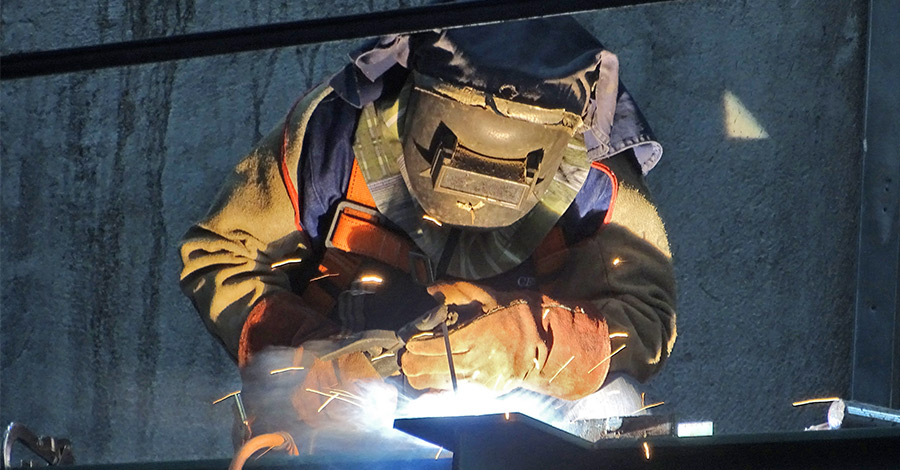
Walk into a fabrication shop on a Tuesday morning in Great Falls and you'll find the same thing you'd find in Billings, Bozeman, Butte, or Helena: someone running a bead, a plasma cutter moving through plate steel, a press brake forming angles for a job that ships by Friday. The work looks similar from shop to shop. The stakes are the same. And the gases making it possible — argon, CO₂, oxygen, acetylene — are as essential to that operation as the welder running them.
Montana's manufacturing sector doesn't always get the recognition it deserves. It doesn't have the visibility of the energy industry or the cultural identity of agriculture. But the numbers tell a story worth understanding, and for anyone who supplies or depends on this sector, the growth over the past five years has been significant.
A $2 Billion Sector Outpacing National Growth
Montana's manufacturing sector generated more than $2 billion in base labor earnings in 2024, ranking second among the state's base industries behind hospitality. That's significant economic activity in a state that isn't always thought of as a manufacturing center.
Real GDP from Montana manufacturing reached $3 billion in 2024, and manufacturing GDP has grown approximately 7 percent faster than the nation since early 2020, with strong growth in areas including fabricated metals, electronics, and medical equipment. For companies like General Distributing, fabricated metal manufacturing is especially significant because welding equipment, industrial gases, abrasives, safety products, and related supplies are essential to many fabrication operations.
The number of manufacturing establishments in Montana increased from 1,403 in 2014 to 1,883 in 2024, a net gain of 480 operations in a decade. The industry did experience a 3.4 percent decline in establishments in 2024, the first overall decline in a decade, but the longer-term expansion demonstrates how much Montana's manufacturing landscape has grown and diversified.
For many of these businesses, dependable access to gases, welding equipment, consumables, safety products, and technical support is part of keeping production moving. For one shop, that might mean a cylinder of argon for TIG welding. For a larger production fabricator, it could mean a reliable gas supply program supporting multiple welders and shifts. The scale and requirements vary from operation to operation, but reliable supply and service remain critical wherever these products are part of the process.
Where the Work Is Happening, and Where We Are
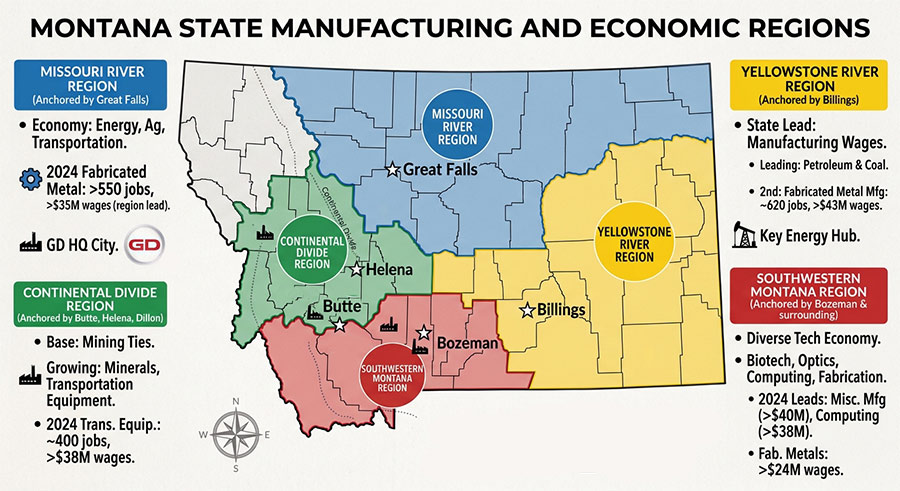
Montana’s manufacturing base isn’t concentrated in one place. It stretches across the state, shaped by local resources, infrastructure, workforce, and industry history. According to the 2025 Manufacturing in Montana and the State of the Economy report, Montana manufacturing generated more than $2 billion in labor earnings in 2024, with each region developing a distinct mix of industries.
In the Missouri River Region, Great Falls anchors a manufacturing economy closely connected to energy, agriculture, transportation, and metal fabrication. In 2024, fabricated metal manufacturing accounted for 553 jobs and more than $35 million in annual wages, making it one of the region’s largest manufacturing sectors. Great Falls remains an important energy and manufacturing center and is also home to General Distributing’s headquarters, putting GD at the center of a region we have served for generations.
In the Yellowstone River Region, Billings anchors Montana’s largest manufacturing region by output and total manufacturing wages. Petroleum and coal products lead the regional manufacturing economy, while fabricated metal manufacturing ranked second in payroll, generating $43.6 million in annual wages and supporting about 620 jobs in the latest period reported. The concentration of energy, fabrication, and other industrial activity makes the Billings area an important part of GD’s statewide service territory.
In the Continental Divide Region, Butte, Helena, and Dillon anchor a manufacturing base with deep historical ties to mining and a growing presence in nonmetallic mineral products and transportation equipment. In 2024, nonmetallic mineral manufacturing, including concrete, glass, and cut stone, generated nearly $43 million in wages. Transportation equipment manufacturing, primarily trailers and aircraft parts, grew from roughly 250 jobs in 2022 to nearly 400, with annual wages exceeding $38 million.
In Southwestern Montana, Bozeman and surrounding communities have developed one of the state’s most diverse and technology-oriented manufacturing economies. The region combines traditional fabrication with medical devices, sporting equipment, computer and electronic products, biotechnology, optics, and photonics. In 2024, miscellaneous manufacturing led the region with more than $40 million in annual wages, followed by computer and electronic products at more than $38 million. Fabricated metals remained an important part of the region’s industrial base, generating more than $24 million in annual wages.
The Gases Behind the Work
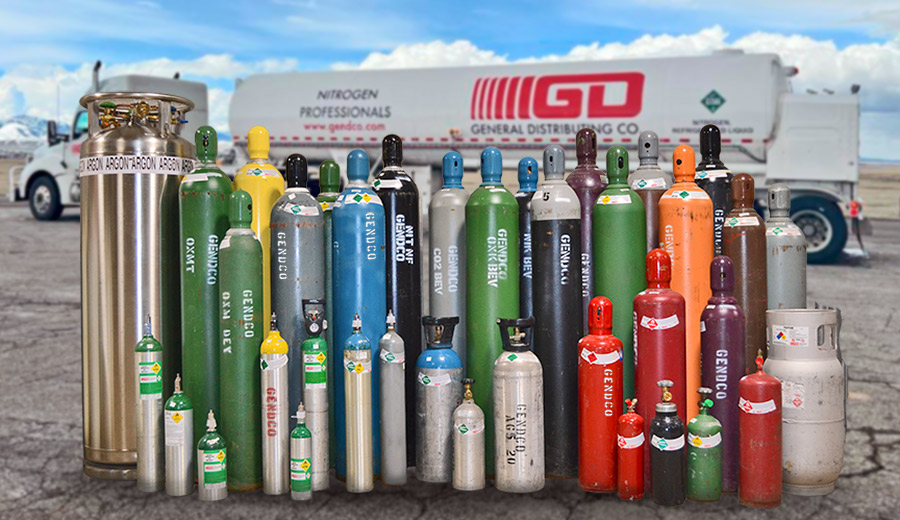
Welding and fabrication processes aren't one-size-fits-all, and neither is the gas supply behind them.
MIG welding on mild steel commonly uses a shielding gas blend of 75 percent argon and 25 percent CO₂, although other blends and straight CO₂ are used depending on the application, transfer mode, wire, and desired weld characteristics. TIG welding on stainless steel and aluminum typically uses pure argon, with specialized blends used for certain applications.
Plasma cutting can be as straightforward as using clean, dry compressed air, while more advanced systems use different plasma and shield gases depending on the material, thickness, and desired cut quality. Oxygen is commonly used for high-quality plasma cutting of mild steel, while nitrogen and argon-hydrogen mixtures are among the options for stainless steel and aluminum.
Oxy-fuel cutting and heating pair oxygen with a fuel gas. Acetylene provides the highest flame temperature of the common fuel gases and is valued for fast preheating and piercing, while alternatives such as propylene can offer advantages for many cutting and heating applications.
Getting the gas right for the process isn't a minor detail. Shielding and cutting gases affect arc characteristics, penetration, spatter, bead profile, cutting speed, and edge quality. The right gas can mean less cleanup, better consistency, and a process that performs the way it was intended to.
That's why the relationship with a gas supplier can go beyond cylinders and deliveries. A knowledgeable supplier who understands the process, equipment, material, and application can help a shop identify the right gas for the job and troubleshoot gas-related issues when performance isn't where it should be.
That's a different kind of supply relationship than a price list and a delivery schedule. It's the kind that develops over time through consistent local service and people who understand the work their customers actually do.
A Workforce Challenge That Makes Supply Relationships Matter More
Workforce availability remains an important issue for Montana manufacturers. The 2025 Manufacturing in Montana and the State of the Economy report found 1.7 job openings for every hire in durable manufacturing, a level above pre-pandemic norms.
For manufacturers operating with limited staffing, efficiency and uptime become even more important. A gas supply interruption, a cylinder that wasn't reordered, a delayed delivery, or an unanswered application question can disrupt production when there aren't extra people or hours available to make up the difference.
This is the environment Montana's manufacturers are operating in right now. It's the environment we're built to support.
That's where a dependable supply relationship matters. Reliable deliveries, local inventory, responsive service, and people who understand the customer's operation can help reduce avoidable disruptions and keep production moving.
The Thread That Runs Through It
General Distributing has supplied welding and industrial gases to Montana's fabrication shops from six branch locations for over 75 years. The growth in this sector over the past decade, more shops, more processes, more demand for the right gas at the right specification, is something we see reflected in our own operations every day.
We're not a national distributor routing orders through a call center. We're the people down the road, with a branch in your region, staffed by team members who know what you're running and can help when something isn't right. That's what we've been since 1948, and it's what we're still building toward.
If you're a fabricator or shop owner in Montana evaluating your gas supply setup, we'd like to be part of the conversation you have before you make that decision.
Next in the series: Post 3 — Food & Beverage: What's in Your Pint — and Your Pantry. CO₂, nitrogen, and the gas supply behind Montana's brewing boom.
Subscribe to Gendco Happenings — our biweekly newsletter — to stay connected with what's happening across our six Montana branches.
Manufacturing, fabrication, and the gases that keep Montana's shops running. This is the second post in our series, Fueled by Gases: The Industries That Run Montana.
Walk into a fabrication shop on a Tuesday morning in Great Falls and you'll find the same thing you'd find in Billings, Bozeman, Butte, or Helena: someone running a bead, a plasma cutter moving through plate steel, a press brake forming angles for a job that ships by Friday. The work looks similar from shop to shop. The stakes are the same. And the gases making it possible — argon, CO₂, oxygen, acetylene — are as essential to that operation as the welder running them.
Montana's manufacturing sector doesn't always get the recognition it deserves. It doesn't have the visibility of the energy industry or the cultural identity of agriculture. But the numbers tell a story worth understanding, and for anyone who supplies or depends on this sector, the growth over the past five years has been significant.
A $2 Billion Sector Outpacing National Growth
Montana's manufacturing sector generated more than $2 billion in base labor earnings in 2024, ranking second among the state's base industries behind hospitality. That's significant economic activity in a state that isn't always thought of as a manufacturing center.
Real GDP from Montana manufacturing reached $3 billion in 2024, and manufacturing GDP has grown approximately 7 percent faster than the nation since early 2020, with strong growth in areas including fabricated metals, electronics, and medical equipment. For companies like General Distributing, fabricated metal manufacturing is especially significant because welding equipment, industrial gases, abrasives, safety products, and related supplies are essential to many fabrication operations.
The number of manufacturing establishments in Montana increased from 1,403 in 2014 to 1,883 in 2024, a net gain of 480 operations in a decade. The industry did experience a 3.4 percent decline in establishments in 2024, the first overall decline in a decade, but the longer-term expansion demonstrates how much Montana's manufacturing landscape has grown and diversified.
For many of these businesses, dependable access to gases, welding equipment, consumables, safety products, and technical support is part of keeping production moving. For one shop, that might mean a cylinder of argon for TIG welding. For a larger production fabricator, it could mean a reliable gas supply program supporting multiple welders and shifts. The scale and requirements vary from operation to operation, but reliable supply and service remain critical wherever these products are part of the process.
Where the Work Is Happening, and Where We Are
Montana’s manufacturing base isn’t concentrated in one place. It stretches across the state, shaped by local resources, infrastructure, workforce, and industry history. According to the 2025 Manufacturing in Montana and the State of the Economy report, Montana manufacturing generated more than $2 billion in labor earnings in 2024, with each region developing a distinct mix of industries.
In the Missouri River Region, Great Falls anchors a manufacturing economy closely connected to energy, agriculture, transportation, and metal fabrication. In 2024, fabricated metal manufacturing accounted for 553 jobs and more than $35 million in annual wages, making it one of the region’s largest manufacturing sectors. Great Falls remains an important energy and manufacturing center and is also home to General Distributing’s headquarters, putting GD at the center of a region we have served for generations.
In the Yellowstone River Region, Billings anchors Montana’s largest manufacturing region by output and total manufacturing wages. Petroleum and coal products lead the regional manufacturing economy, while fabricated metal manufacturing ranked second in payroll, generating $43.6 million in annual wages and supporting about 620 jobs in the latest period reported. The concentration of energy, fabrication, and other industrial activity makes the Billings area an important part of GD’s statewide service territory.
In the Continental Divide Region, Butte, Helena, and Dillon anchor a manufacturing base with deep historical ties to mining and a growing presence in nonmetallic mineral products and transportation equipment. In 2024, nonmetallic mineral manufacturing, including concrete, glass, and cut stone, generated nearly $43 million in wages. Transportation equipment manufacturing, primarily trailers and aircraft parts, grew from roughly 250 jobs in 2022 to nearly 400, with annual wages exceeding $38 million.
In Southwestern Montana, Bozeman and surrounding communities have developed one of the state’s most diverse and technology-oriented manufacturing economies. The region combines traditional fabrication with medical devices, sporting equipment, computer and electronic products, biotechnology, optics, and photonics. In 2024, miscellaneous manufacturing led the region with more than $40 million in annual wages, followed by computer and electronic products at more than $38 million. Fabricated metals remained an important part of the region’s industrial base, generating more than $24 million in annual wages.
The Gases Behind the Work
Welding and fabrication processes aren't one-size-fits-all, and neither is the gas supply behind them.
MIG welding on mild steel commonly uses a shielding gas blend of 75 percent argon and 25 percent CO₂, although other blends and straight CO₂ are used depending on the application, transfer mode, wire, and desired weld characteristics. TIG welding on stainless steel and aluminum typically uses pure argon, with specialized blends used for certain applications.
Plasma cutting can be as straightforward as using clean, dry compressed air, while more advanced systems use different plasma and shield gases depending on the material, thickness, and desired cut quality. Oxygen is commonly used for high-quality plasma cutting of mild steel, while nitrogen and argon-hydrogen mixtures are among the options for stainless steel and aluminum.
Oxy-fuel cutting and heating pair oxygen with a fuel gas. Acetylene provides the highest flame temperature of the common fuel gases and is valued for fast preheating and piercing, while alternatives such as propylene can offer advantages for many cutting and heating applications.
Getting the gas right for the process isn't a minor detail. Shielding and cutting gases affect arc characteristics, penetration, spatter, bead profile, cutting speed, and edge quality. The right gas can mean less cleanup, better consistency, and a process that performs the way it was intended to.
That's why the relationship with a gas supplier can go beyond cylinders and deliveries. A knowledgeable supplier who understands the process, equipment, material, and application can help a shop identify the right gas for the job and troubleshoot gas-related issues when performance isn't where it should be.
That's a different kind of supply relationship than a price list and a delivery schedule. It's the kind that develops over time through consistent local service and people who understand the work their customers actually do.
A Workforce Challenge That Makes Supply Relationships Matter More
Workforce availability remains an important issue for Montana manufacturers. The 2025 Manufacturing in Montana and the State of the Economy report found 1.7 job openings for every hire in durable manufacturing, a level above pre-pandemic norms.
For manufacturers operating with limited staffing, efficiency and uptime become even more important. A gas supply interruption, a cylinder that wasn't reordered, a delayed delivery, or an unanswered application question can disrupt production when there aren't extra people or hours available to make up the difference.
This is the environment Montana's manufacturers are operating in right now. It's the environment we're built to support.
That's where a dependable supply relationship matters. Reliable deliveries, local inventory, responsive service, and people who understand the customer's operation can help reduce avoidable disruptions and keep production moving.
The Thread That Runs Through It
General Distributing has supplied welding and industrial gases to Montana's fabrication shops from six branch locations for over 75 years. The growth in this sector over the past decade, more shops, more processes, more demand for the right gas at the right specification, is something we see reflected in our own operations every day.
We're not a national distributor routing orders through a call center. We're the people down the road, with a branch in your region, staffed by team members who know what you're running and can help when something isn't right. That's what we've been since 1948, and it's what we're still building toward.
If you're a fabricator or shop owner in Montana evaluating your gas supply setup, we'd like to be part of the conversation you have before you make that decision.
Next in the series: Post 3 — Food & Beverage: What's in Your Pint — and Your Pantry. CO₂, nitrogen, and the gas supply behind Montana's brewing boom.