
How to Properly Store and Handle Industrial Gas Cylinders
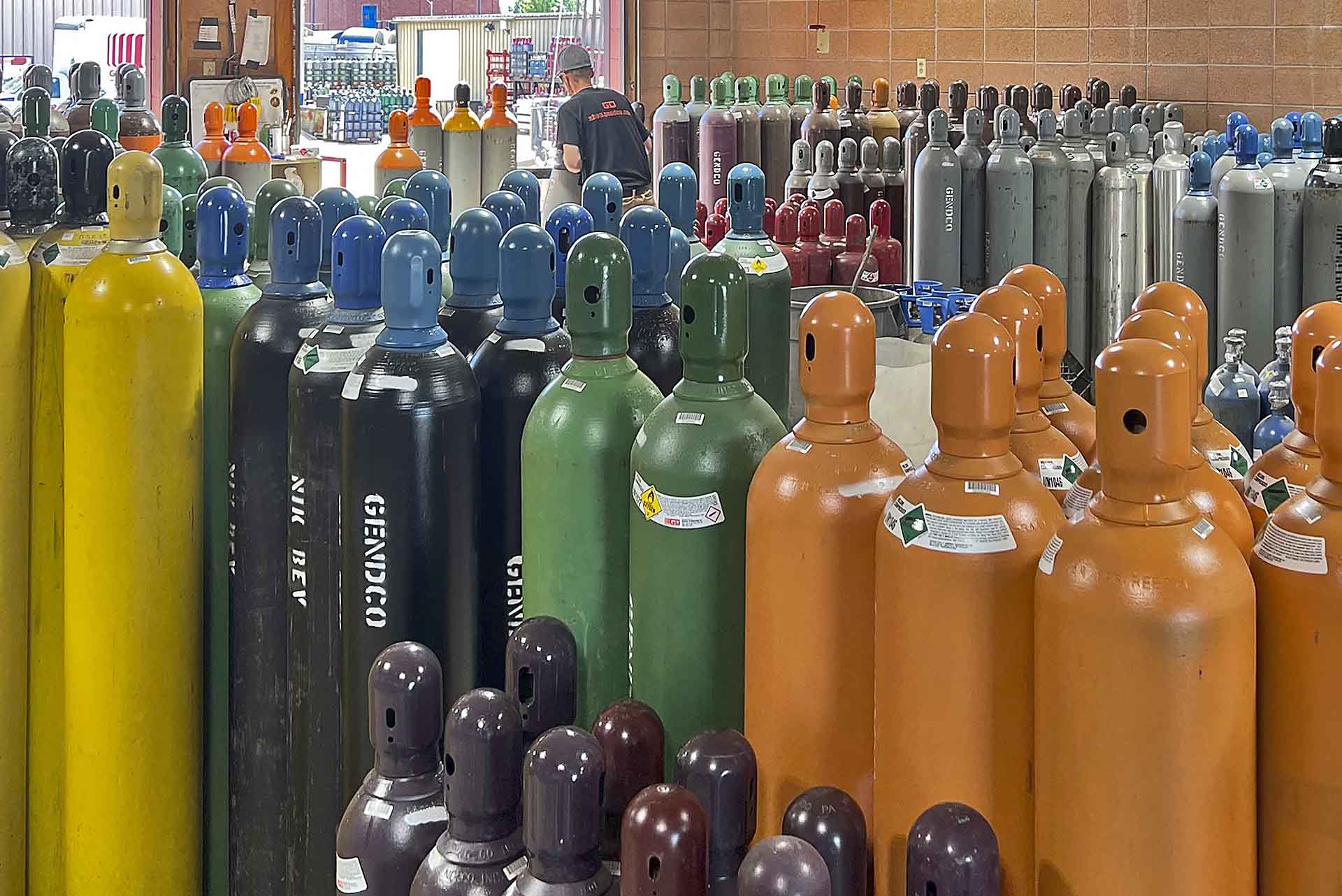
Walk through most welding shops and you'll find cylinders that are well-used, well-traveled, and not always well-secured. Leaned against a workbench. Sitting uncapped in the bed of a truck. Stored next to the cutting table because that's where they're convenient. It's easy to get comfortable around equipment you work with every day. But industrial gas cylinders deserve a consistent level of respect — not because OSHA says so, though they do, but because the consequences of getting it wrong are serious enough that no job is worth the shortcut.
This post covers the fundamentals of proper cylinder storage, handling, and transport — what the standards require and why they exist.
First, understand what you're working with
Industrial gas cylinders store compressed gas at pressures that commonly exceed 2,000 PSI. That's a significant amount of energy stored in a relatively small package. The cylinder body and valve are what stand between a controlled, useful tool and a serious hazard — which means both deserve to be treated accordingly.
Different gases also carry different risks. Fuel gases like acetylene and propylene are flammable. Oxygen is an oxidizer that dramatically accelerates combustion — a small spark in an oxygen-rich environment behaves very differently than it would in open air. Inert gases like argon, nitrogen, and CO2 won't ignite, but in an enclosed space they can displace oxygen quickly enough to be lethal without warning. Specialty gases vary widely in their hazard profiles.
The point isn't to make cylinders feel intimidating. It's to make sure the handling decisions you make every day are grounded in what's actually inside them.
Proper Cylinder Storage
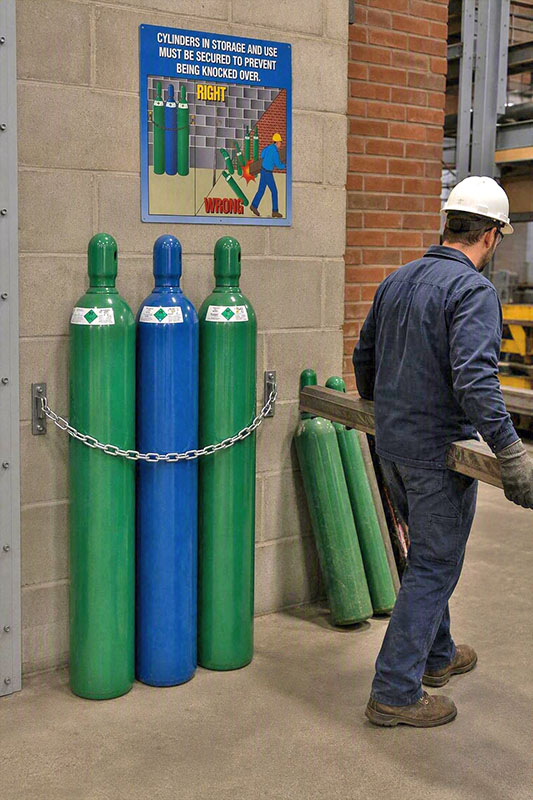 Correct storage is the foundation of cylinder safety, and most of the requirements come down to a handful of consistent principles.
Store cylinders upright and secured. Cylinders should always be stored vertically and restrained with a chain, strap, or bracket attached to a wall, post, or cylinder cart. This is non-negotiable. A cylinder that falls and shears its valve doesn't leak — it becomes an unguided projectile with enough force to breach a concrete wall.
Separate oxygen from fuel gases. Oxygen and fuel gases — acetylene, propylene, and similar — must be stored at least 20 feet apart, or separated by a fire-resistant barrier no less than 5 feet high. This is an OSHA requirement under 29 CFR 1910.253 and exists because the combination of an oxidizer and a fuel source in close proximity creates conditions for a fire or explosion that standard suppression systems aren't built to handle.
Keep full and empty cylinders apart. It sounds like a small thing, and it creates real problems when ignored. Empty cylinders should be clearly marked and stored separately from full ones. Mixed storage leads to confusion, and cylinders being put back into service before they've been refilled.
Control temperature and ensure ventilation. Cylinders should not be stored in areas where temperatures exceed 125°F. Avoid direct sunlight in enclosed storage areas. Any space where cylinders are stored should be adequately ventilated — particularly for inert gases that can displace breathable air without any visible or odor-based warning.
Keep fuel gases away from ignition sources. Storage areas for acetylene, propylene, and similar gases should be clear of open flames, electrical panels, welding equipment, and any other potential ignition source.
Outdoor storage requires the same discipline. Outdoor cylinder storage is acceptable, but the same restraint requirements apply. Protect cylinders from ground moisture, extreme temperature swings, and direct weather exposure where possible.
Safe Handling and Transport
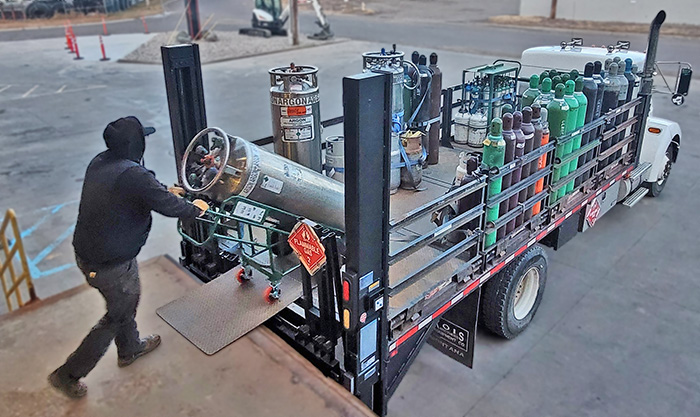
How cylinders move through your facility matters as much as where they're stored.
Use a cylinder cart — every time. Cylinders should never be dragged across the floor, or carried by the valve. A proper cylinder cart with a restraining chain is the right tool for the job. It's also faster and easier than improvising.
Replace the valve protection cap when not in use. The cap on top of the cylinder protects the most mechanically vulnerable part of the assembly. It goes back on every time a regulator is disconnected — during storage, during transport, and any time the cylinder isn't actively in use.
Never lift a cylinder by its valve or cap. When hoisting cylinders with mechanical equipment, use a proper cradle or platform. Slings, magnets, or chains attached to the valve or cap are not rated for that load and can cause valve failure.
Secure cylinders during vehicle transport. Cylinders should be transported upright whenever possible and always restrained with a chain or strap. Do not leave cylinders in an enclosed vehicle for extended periods, particularly in warmer months — heat buildup inside a vehicle cab or enclosed trailer raises internal pressure significantly.
Check for leaks before connecting equipment. A soapy water solution applied to the valve and connections is a reliable, low-tech leak check. Bubbles indicate a problem. If you detect or smell a leak, move the cylinder to a ventilated outdoor area, keep ignition sources clear, and contact your supplier. Do not attempt to repair a cylinder valve yourself.
Regulator and Valve Handling
A few specific practices here that are worth calling out separately, because they're where shortcuts are most likely to cause problems.
Open cylinder valves slowly — particularly oxygen cylinders, where a rapid pressure surge can damage the regulator or cause adiabatic ignition of contaminants in the line. Open the valve fully once pressure has equalized, then back it off a quarter turn.
Never apply oil, grease, or petroleum-based products to oxygen equipment. Oxygen reacts violently with hydrocarbons under pressure. This includes hand lotion — wash your hands before working with oxygen fittings.
Stand to the side of the regulator when opening a cylinder valve, not in front of it. A regulator failure under pressure will blow forward.
When a cylinder is empty or nearly empty, close the valve completely and leave a small amount of positive pressure in the cylinder. Never fully deplete a cylinder — it may create a vacuum condition that can draw moisture and contaminants into the cylinder during storage.
When Something Doesn't Seem Right — Call Us
If a cylinder valve is stuck, damaged, or behaving inconsistently, that's not a problem to work around.
General Distributing offers cylinder testing and hydrostatic testing services across our Montana locations. We test all of our cylinders regularily. If you have questions about a specific cylinder, a specific gas, or whether your storage setup meets current requirements, our team can help you work through it. We also offer on-site training for facilities that want to make sure their whole crew is operating with the same baseline knowledge.
This is a case where a five-minute conversation with someone who knows the material is worth more than an hour of searching for answers online.
The Professional Standard
Shops that handle cylinders correctly aren't doing it because a checklist told them to. They're doing it because it's the professional standard, and because a well-run operation doesn't leave room for preventable problems.
The fundamentals aren't complicated: secure cylinders upright, separate incompatible gases, cap valves when not in use, move cylinders with proper equipment, and check for leaks before connecting. Build those habits into how your team works and they stop requiring any extra thought at all.
If you have questions about cylinder handling, storage requirements, or whether your cylinders are due for testing, reach out to our team. We're here.
Subscribe to Gendco Happenings — our biweekly newsletter — to stay connected with what's happening across our six Montana branches.
Walk through most welding shops and you'll find cylinders that are well-used, well-traveled, and not always well-secured. Leaned against a workbench. Sitting uncapped in the bed of a truck. Stored next to the cutting table because that's where they're convenient. It's easy to get comfortable around equipment you work with every day. But industrial gas cylinders deserve a consistent level of respect — not because OSHA says so, though they do, but because the consequences of getting it wrong are serious enough that no job is worth the shortcut.
This post covers the fundamentals of proper cylinder storage, handling, and transport — what the standards require and why they exist.
First, understand what you're working with
Industrial gas cylinders store compressed gas at pressures that commonly exceed 2,000 PSI. That's a significant amount of energy stored in a relatively small package. The cylinder body and valve are what stand between a controlled, useful tool and a serious hazard — which means both deserve to be treated accordingly.
Different gases also carry different risks. Fuel gases like acetylene and propylene are flammable. Oxygen is an oxidizer that dramatically accelerates combustion — a small spark in an oxygen-rich environment behaves very differently than it would in open air. Inert gases like argon, nitrogen, and CO2 won't ignite, but in an enclosed space they can displace oxygen quickly enough to be lethal without warning. Specialty gases vary widely in their hazard profiles.
The point isn't to make cylinders feel intimidating. It's to make sure the handling decisions you make every day are grounded in what's actually inside them.
Proper Cylinder Storage
Correct storage is the foundation of cylinder safety, and most of the requirements come down to a handful of consistent principles.
Store cylinders upright and secured. Cylinders should always be stored vertically and restrained with a chain, strap, or bracket attached to a wall, post, or cylinder cart. This is non-negotiable. A cylinder that falls and shears its valve doesn't leak — it becomes an unguided projectile with enough force to breach a concrete wall.
Separate oxygen from fuel gases. Oxygen and fuel gases — acetylene, propylene, and similar — must be stored at least 20 feet apart, or separated by a fire-resistant barrier no less than 5 feet high. This is an OSHA requirement under 29 CFR 1910.253 and exists because the combination of an oxidizer and a fuel source in close proximity creates conditions for a fire or explosion that standard suppression systems aren't built to handle.
Keep full and empty cylinders apart. It sounds like a small thing, and it creates real problems when ignored. Empty cylinders should be clearly marked and stored separately from full ones. Mixed storage leads to confusion, and cylinders being put back into service before they've been refilled.
Control temperature and ensure ventilation. Cylinders should not be stored in areas where temperatures exceed 125°F. Avoid direct sunlight in enclosed storage areas. Any space where cylinders are stored should be adequately ventilated — particularly for inert gases that can displace breathable air without any visible or odor-based warning.
Keep fuel gases away from ignition sources. Storage areas for acetylene, propylene, and similar gases should be clear of open flames, electrical panels, welding equipment, and any other potential ignition source.
Outdoor storage requires the same discipline. Outdoor cylinder storage is acceptable, but the same restraint requirements apply. Protect cylinders from ground moisture, extreme temperature swings, and direct weather exposure where possible.
Safe Handling and Transport
How cylinders move through your facility matters as much as where they're stored.
Use a cylinder cart — every time. Cylinders should never be dragged across the floor, or carried by the valve. A proper cylinder cart with a restraining chain is the right tool for the job. It's also faster and easier than improvising.
Replace the valve protection cap when not in use. The cap on top of the cylinder protects the most mechanically vulnerable part of the assembly. It goes back on every time a regulator is disconnected — during storage, during transport, and any time the cylinder isn't actively in use.
Never lift a cylinder by its valve or cap. When hoisting cylinders with mechanical equipment, use a proper cradle or platform. Slings, magnets, or chains attached to the valve or cap are not rated for that load and can cause valve failure.
Secure cylinders during vehicle transport. Cylinders should be transported upright whenever possible and always restrained with a chain or strap. Do not leave cylinders in an enclosed vehicle for extended periods, particularly in warmer months — heat buildup inside a vehicle cab or enclosed trailer raises internal pressure significantly.
Check for leaks before connecting equipment. A soapy water solution applied to the valve and connections is a reliable, low-tech leak check. Bubbles indicate a problem. If you detect or smell a leak, move the cylinder to a ventilated outdoor area, keep ignition sources clear, and contact your supplier. Do not attempt to repair a cylinder valve yourself.
Regulator and Valve Handling
A few specific practices here that are worth calling out separately, because they're where shortcuts are most likely to cause problems.
Open cylinder valves slowly — particularly oxygen cylinders, where a rapid pressure surge can damage the regulator or cause adiabatic ignition of contaminants in the line. Open the valve fully once pressure has equalized, then back it off a quarter turn.
Never apply oil, grease, or petroleum-based products to oxygen equipment. Oxygen reacts violently with hydrocarbons under pressure. This includes hand lotion — wash your hands before working with oxygen fittings.
Stand to the side of the regulator when opening a cylinder valve, not in front of it. A regulator failure under pressure will blow forward.
When a cylinder is empty or nearly empty, close the valve completely and leave a small amount of positive pressure in the cylinder. Never fully deplete a cylinder — it may create a vacuum condition that can draw moisture and contaminants into the cylinder during storage.
When Something Doesn't Seem Right — Call Us
If a cylinder valve is stuck, damaged, or behaving inconsistently, that's not a problem to work around.
General Distributing offers cylinder testing and hydrostatic testing services across our Montana locations. We test all of our cylinders regularily. If you have questions about a specific cylinder, a specific gas, or whether your storage setup meets current requirements, our team can help you work through it. We also offer on-site training for facilities that want to make sure their whole crew is operating with the same baseline knowledge.
This is a case where a five-minute conversation with someone who knows the material is worth more than an hour of searching for answers online.
The Professional Standard
Shops that handle cylinders correctly aren't doing it because a checklist told them to. They're doing it because it's the professional standard, and because a well-run operation doesn't leave room for preventable problems.
The fundamentals aren't complicated: secure cylinders upright, separate incompatible gases, cap valves when not in use, move cylinders with proper equipment, and check for leaks before connecting. Build those habits into how your team works and they stop requiring any extra thought at all.
If you have questions about cylinder handling, storage requirements, or whether your cylinders are due for testing, reach out to our team. We're here.